MICROSOFT OPEN OFFICE
MS Word- Writer (.odt)
MS Excel- Calc (.ods)
MS Paint- Draw (.odg)
MS Powerpoint- Impress (.odp)
MS Publisher- Base (.odb)
Huwebes, Agosto 25, 2011

Martes, Agosto 9, 2011
Lunes, Agosto 8, 2011
Chapter 3 Lesson 3 Summary
PC CARE AND SAFETY PROCEDURES FOR USERS

How to Take Care of your PC
1. Computers need a good working temperature to work properly. They need to be placed in a cool and dry place. You can maintain good temperature with an electric fan or air conditioning.
2. All the cables and connectors must be tied together to keep away from walk-ways to avoid accidents.
3. Refrain from eating in front of a computer. Food bits attract insects like ants and cockroaches that can penetrate the hardware and cause computer malfunction. Spilled drink, on the other hands, might cause short circuits.
4. Always use an AVR ( Automatic Voltage Regulator) to regulate the electricity. Too much electric voltage might cause the unit to short. Also, turn off computers during lightning as these can cause electrical surges to the computer.
5. Do not bump or drop the computer peripherals or components as any damage may cause them to malfunction.
6. Avoid clutter around your computer. Use soft cloth in cleaning your computer to avoid scratches.
7. Always scan for computer viruses. Internet connection and external storage often carry viruses that could damage files and cause computer malfunctions.
USER'S HEALTH RISKS AND PREVENTION
THE PROPER POSTURE WHILE USING COMPUTER
PC's are said to be "user-friendly," but this doesn't mean using them does not have health risks.
Good Working Habits
> Tap on the keys gently.
> Avoid long, undistubed periods of typing. You may take a short stretch breaks every 20 mins.
> Avoid long, undistubed periods of typing. You may take a short stretch breaks every 20 mins.
> Avoid staring at the monitor for long periods. Take vision breaks and do eye exercises.
Proper Workstation Design
>Position in a well-ventilated room.
> Use an adjustable workstation and an ergonomic computer chair.
> Place the monitor 16 to 24 inches away at eye level or slightly at a lower angle.
> Use extendable/retractable legs of the keyboard.
> Place mouse where it is easily accessible by your dominant hand.
> Use a documented holder to minimize vertical head move movements.
Proper Posture
> Sit up straight and put feet flat on the floor. Use a headrest if needed.
> Position your lower arms parallel with the floor and level to your keyboard, with elbows at your side.
> Keep wrists straight.
> Do not lean into tn\he monitor, but sit close enough to the keyboard and the mouse to stay relaxed.
Martes, Hulyo 26, 2011
History and Types of Computers
"HISTORY OF COMPUTERS"
The earliest civilizations already had concepts of number and counting. Representations vary from one civilization to another, thus, there is the Babylonian system, the Mayan system, the Egyptian system, the Hindu-Arabic system, the Roman system, were used in trade and simple calculations. But due to lack of convenient writing tools like pen and paper, these systems were not used in computations. Instead, the Romans used the abacus
From 1100 AD to 1500 AD, there was a debate between the supporters of the Roman Number system using the abacus and the Hindu-Arabic system using algorithm on which system was more efficient. The Hindu-Arabic system won.
TYPES OF COMPUTERS
Supercomputer--- this computer is considered the fastest computer and is used in science-related areas.
Mainframe Computers--- this is very expensive and large computer can support up to thousands of users at the same time.
Minicomputer--- this is a medium-powered computer that stands between a standard personal computer and a mainframe.
Workstation--- this type commonly used for desktop publication.
Personal Computer--- as the name suggests, this computer is designed for personal uses.
TYPES OF PC
Desktop--- this is a computer which is designed to fit comfortably on the top of a desk.
Portable Computers--- this includes computers that are small enough to be carried.
TYPES OF PORTABLE COMPUTER
Notebook--- this is small enough to easily fit to a briefcase.
Subnotebook--- this has a smaller keyboard and a screen slightly lighter and smaller, compared to a notebook computer
Laptop Computer--- this is one of the most popular portable computer.
Palmtop--- it can literary fit into your arm.
Personal Digit Assistant(PDA)--- a handheld device that combines computing, telephone or fax and networking features.
Supercomputer--- this computer is considered the fastest computer and is used in science-related areas.
Mainframe Computers--- this is very expensive and large computer can support up to thousands of users at the same time.
Minicomputer--- this is a medium-powered computer that stands between a standard personal computer and a mainframe.
Workstation--- this type commonly used for desktop publication.
Personal Computer--- as the name suggests, this computer is designed for personal uses.
TYPES OF PC
Desktop--- this is a computer which is designed to fit comfortably on the top of a desk.
Portable Computers--- this includes computers that are small enough to be carried.
TYPES OF PORTABLE COMPUTER
Notebook--- this is small enough to easily fit to a briefcase.
Subnotebook--- this has a smaller keyboard and a screen slightly lighter and smaller, compared to a notebook computer
Laptop Computer--- this is one of the most popular portable computer.
Palmtop--- it can literary fit into your arm.
Personal Digit Assistant(PDA)--- a handheld device that combines computing, telephone or fax and networking features.
Huwebes, Hulyo 21, 2011
Lunes, Hulyo 18, 2011
Sabado, Hulyo 9, 2011
Multiple Intelligences
For Me?
I think I Number Smart.
I think I am Number Smart, because when i was a child, my parents used to enter me in seminars, trainings, and even contests regarding the subject Math.
From there on, I became more and more talented in the subject Math
:)
I think I Number Smart.
I think I am Number Smart, because when i was a child, my parents used to enter me in seminars, trainings, and even contests regarding the subject Math.
From there on, I became more and more talented in the subject Math
:)
Sabado, Hunyo 25, 2011
Assg. # 6
1. Henry Sy

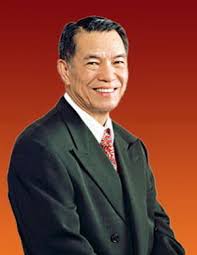


Owner of SM Department Store
2. Lucio Tan
Tanduay Distillers, Inc.Owner
3.Tony Tan Caktiong
Chairman,Jollibee Food Corp.
Huwebes, Hunyo 16, 2011
Do you understand pg 19
for me it is all equal because it is for the comfort and need of people
that is all tank u and good bye
Miyerkules, Hunyo 15, 2011
Assignment on PECs
1. Evaluate the different entrepreneurial characteristics under PEC's. How does applying similar characteristics help us succeed in the other areas of life? Explain your answers by giving examples.
Answer:
1. Vigilance for Opportunities
2. Commitment to work contract
3. Persistence
4. Willingness to take risk
5. Demand for efficiency and quality
6. Goal setting
7. Information Seeking
8. Systematic Planning and Monitoring
9. Persuasion and Networking
10. Self Confidence
Being vigilant to opportunities that will help in a person's success, taking the risk whether the result of the action is negative or positive as long as he is committed and focused on his goals with self confidence helps a person succeed in any endeavor he indulges in. An example of which would be a plain housewife whose only wish is to help augment in her family's income. She decided to use her ability to bake cookies to sell to her neighbors and friends. Because of her willingness to take the risk at venturing into this home-based business, she took it also as an opportunity for her to earn her own money, therefore helping her husband in their family expenses through her determination to earn even in a simple manner as using her talent in baking.
2. Explain how having the Personal Entrepreneurial Competencies can help you become a successful entrepreneur.
Answer:
Anybody can be a successful entrepreneur as long as he possesses the PEC's, even if he does not come from an entrepreneurial family. A good example would be those who previously had a regular income working in a company and decided later on to resign from their job because they want to seek new opportunities. They decided to enter into the now in demand food cart business because they also want to become their own boss someday. They willingly took the risk in resigning from their regular job to put up their own business using the separation pay they got from the previous company they worked for.
That Is I dont know,,, All?
=)
Answer:
1. Vigilance for Opportunities
2. Commitment to work contract
3. Persistence
4. Willingness to take risk
5. Demand for efficiency and quality
6. Goal setting
7. Information Seeking
8. Systematic Planning and Monitoring
9. Persuasion and Networking
10. Self Confidence
Being vigilant to opportunities that will help in a person's success, taking the risk whether the result of the action is negative or positive as long as he is committed and focused on his goals with self confidence helps a person succeed in any endeavor he indulges in. An example of which would be a plain housewife whose only wish is to help augment in her family's income. She decided to use her ability to bake cookies to sell to her neighbors and friends. Because of her willingness to take the risk at venturing into this home-based business, she took it also as an opportunity for her to earn her own money, therefore helping her husband in their family expenses through her determination to earn even in a simple manner as using her talent in baking.
2. Explain how having the Personal Entrepreneurial Competencies can help you become a successful entrepreneur.
Answer:
Anybody can be a successful entrepreneur as long as he possesses the PEC's, even if he does not come from an entrepreneurial family. A good example would be those who previously had a regular income working in a company and decided later on to resign from their job because they want to seek new opportunities. They decided to enter into the now in demand food cart business because they also want to become their own boss someday. They willingly took the risk in resigning from their regular job to put up their own business using the separation pay they got from the previous company they worked for.
That Is I dont know,,, All?
=)
assignment # ?
Cell Phone

The initial development of wireless technology and the cell phone took decades to perfect. The invention of the first cell phone became the cornerstone of today's modern communication methods.
History
- The hexagonal cell technology that enabled the first cell phone to work was developed by Bell Labs. Hexagonal technology enabled cellular phones to be used while on the move by transmitting wireless signals from one tower to another which broadened the mobility range. Martin Cooper, who worked in the research and development department at Motorola, built a small radio telephone that worked in conjunction with this technology and created the first mobile cellular phone.
Time Period
- The first cell phone was invented in 1973; however, the technology that contributed to the invention of the cell phone was discovered in 1947.
Significance
- Before the invention of the cell phone, modular phones were either mounted in a car and required power from the car's electrical system or used a backpack power system to function. It is invented due to necessity.
Fun Fact
- Martin Cooper made the first call on a cell phone in 1973 to a competitor at AT&T.
Famous Ties
- Actress Hedy Lamarr helped patent a technologically advanced communication system in 1940 which laid the groundwork for mobile phone technology
Lunes, Hunyo 13, 2011
Assignment # 3
#Personal Entrepreneurial Competencies
The original research by McClelland and McBer identified 14 PECs; the EMPRETEC [a UN program for small businesses; from the Spanish words emprendedores (entrepreneurs) and tecnología (technology)] clustered these into just 10:
Achievement Cluster
I. Opportunity Seeking and Initiative
* Does things before asked or forced to by events
* Acts to extend the business into new areas, products or services
* Seizes unusual opportunities to start a new business, obtain financing, equipment, land work space or assistance
II. Risk Taking
* Deliberately calculates risks and evaluates alternatives
* Takes action to reduce risks or control outcomes
* Places self in situations involving a challenge or moderate risk
III. Demand for Efficiency and Quality
* Finds ways to do things better, faster, or cheaper
* Acts to do things that meet or exceed standards of excellence
* Develops or uses procedures to ensure work is completed on time or that work meets agreed upon standards of quality
IV. Persistence
* Takes action in the face of a significant obstacle
* Takes repeated actions or switches to an alternative strategy to meet a challenge or overcome an obstacle
* Takes personal responsibility for the performance necessary to achieve goals and objectives
V. Commitment to the Work Contract
* Makes a personal sacrifice or expends extraordinary effort to complete a job
* Pitches in with workers or in their place to get a job done
* Strives to keep customers satisfied and places long term good will over short term gain
Planning Cluster
VI. Information Seeking
* Personally seeks information from clients, suppliers or competitors
* Does personal research on how to provide a product or service
* Consults experts for business or technical advice
VII. Goal setting
* Sets goals and objectives that are personally meaningful and challenging
* Articulates clear and specific long range goals
* Sets measurable short term objectives
VIII. Systematic Planning and Monitoring
* Plans by breaking large tasks down into time-constrained sub-tasks
* Revises plans in light of feedback on performance or changing circumstances
* Keeps financial records and uses them to make business decisions
Power Cluster
IX. Persuasion and Networking
* Uses deliberate strategies to influence or persuade others
* Uses key people as agents to accomplish own objectives
* Acts to develop and maintain business contracts
X. Independence and self-confidence
* Seeks autonomy from the rules or control of others
* Sticks with own judgement in the face of opposition or early lack of success* Expresses confidence in own ability to complete a difficult task or meet a challenge
The original research by McClelland and McBer identified 14 PECs; the EMPRETEC [a UN program for small businesses; from the Spanish words emprendedores (entrepreneurs) and tecnología (technology)] clustered these into just 10:
Achievement Cluster
I. Opportunity Seeking and Initiative
* Does things before asked or forced to by events
* Acts to extend the business into new areas, products or services
* Seizes unusual opportunities to start a new business, obtain financing, equipment, land work space or assistance
II. Risk Taking
* Deliberately calculates risks and evaluates alternatives
* Takes action to reduce risks or control outcomes
* Places self in situations involving a challenge or moderate risk
III. Demand for Efficiency and Quality
* Finds ways to do things better, faster, or cheaper
* Acts to do things that meet or exceed standards of excellence
* Develops or uses procedures to ensure work is completed on time or that work meets agreed upon standards of quality
IV. Persistence
* Takes action in the face of a significant obstacle
* Takes repeated actions or switches to an alternative strategy to meet a challenge or overcome an obstacle
* Takes personal responsibility for the performance necessary to achieve goals and objectives
V. Commitment to the Work Contract
* Makes a personal sacrifice or expends extraordinary effort to complete a job
* Pitches in with workers or in their place to get a job done
* Strives to keep customers satisfied and places long term good will over short term gain
Planning Cluster
VI. Information Seeking
* Personally seeks information from clients, suppliers or competitors
* Does personal research on how to provide a product or service
* Consults experts for business or technical advice
VII. Goal setting
* Sets goals and objectives that are personally meaningful and challenging
* Articulates clear and specific long range goals
* Sets measurable short term objectives
VIII. Systematic Planning and Monitoring
* Plans by breaking large tasks down into time-constrained sub-tasks
* Revises plans in light of feedback on performance or changing circumstances
* Keeps financial records and uses them to make business decisions
Power Cluster
IX. Persuasion and Networking
* Uses deliberate strategies to influence or persuade others
* Uses key people as agents to accomplish own objectives
* Acts to develop and maintain business contracts
X. Independence and self-confidence
* Seeks autonomy from the rules or control of others
* Sticks with own judgement in the face of opposition or early lack of success* Expresses confidence in own ability to complete a difficult task or meet a challenge
Mag-subscribe sa:
Mga Komento (Atom)